How Weather Gradually Damages Your Roof Over Time
Your roof is built to withstand the elements, but no roofing system is immune to years of rain, wind, temperature swings, and seasonal storms. Over time, even small weather events can create hidden wear that slowly weakens shingles, flashing, underlayment, and decking. Understanding how this happens helps homeowners and property managers take earlier action, reduce repair costs, and protect the rest of the structure. If you want to stay ahead of damage, pairing routine maintenance with professional support, such as roofing installation and repair, and shingle installation and repair, can make a major difference.
Recent industry data shows that weather-related roof damage is not slowing down. The 2025 LexisNexis U.S. Home Insurance Trends Report notes a 9% increase in all-peril severity between 2023 and 2024, the highest level in seven years. That means roof systems are being asked to endure harsher conditions more often, and deterioration can happen faster than many owners expect. For readers who want to understand the maintenance side of that equation, our guide to regular roof inspections is a useful next step.
In Portland and similar wet climates, the problem is not just big storms. It is the accumulation of moisture, debris, wind stress, and repeated expansion and contraction that slowly chips away at a roof’s defenses. In this article, we will break down the main weather threats, the warning signs of gradual roof damage, and the practical steps that help extend roof life. You will also see real-world examples, expert recommendations, and service options that support long-term protection.
Why Weather Causes Slow Roof Deterioration
Weather damage is often cumulative.
One of the biggest misconceptions about roof damage is that it only happens after a dramatic storm. In reality, most roofs fail through cumulative stress. A single rainy day may not cause visible harm, but hundreds of wet days can gradually saturate vulnerable materials, loosen sealants, and allow microscopic openings to become real leaks. Over time, these small issues add up and shorten the roof’s lifespan.
Repeated exposure to moisture also affects the underlying structure. Wood can swell and dry out over and over again, fasteners can loosen, and protective layers can degrade. This is why even roofs that look fine from the street may already be developing hidden issues below the surface.
Temperature changes accelerate material fatigue.
Even in a relatively mild climate, temperature changes place stress on roofing materials. Heat causes materials to expand, while cooler temperatures cause them to contract. When this happens repeatedly, shingles can curl, sealants can crack, and flashing can pull away from vulnerable seams. Over years of exposure, that movement creates more opportunities for water intrusion.
This process is especially important for older roofs, where materials are already less flexible than they once were. The older the system, the more likely it is that temperature swings will expose weak points and make repair needs more urgent.
Wind and moisture work together
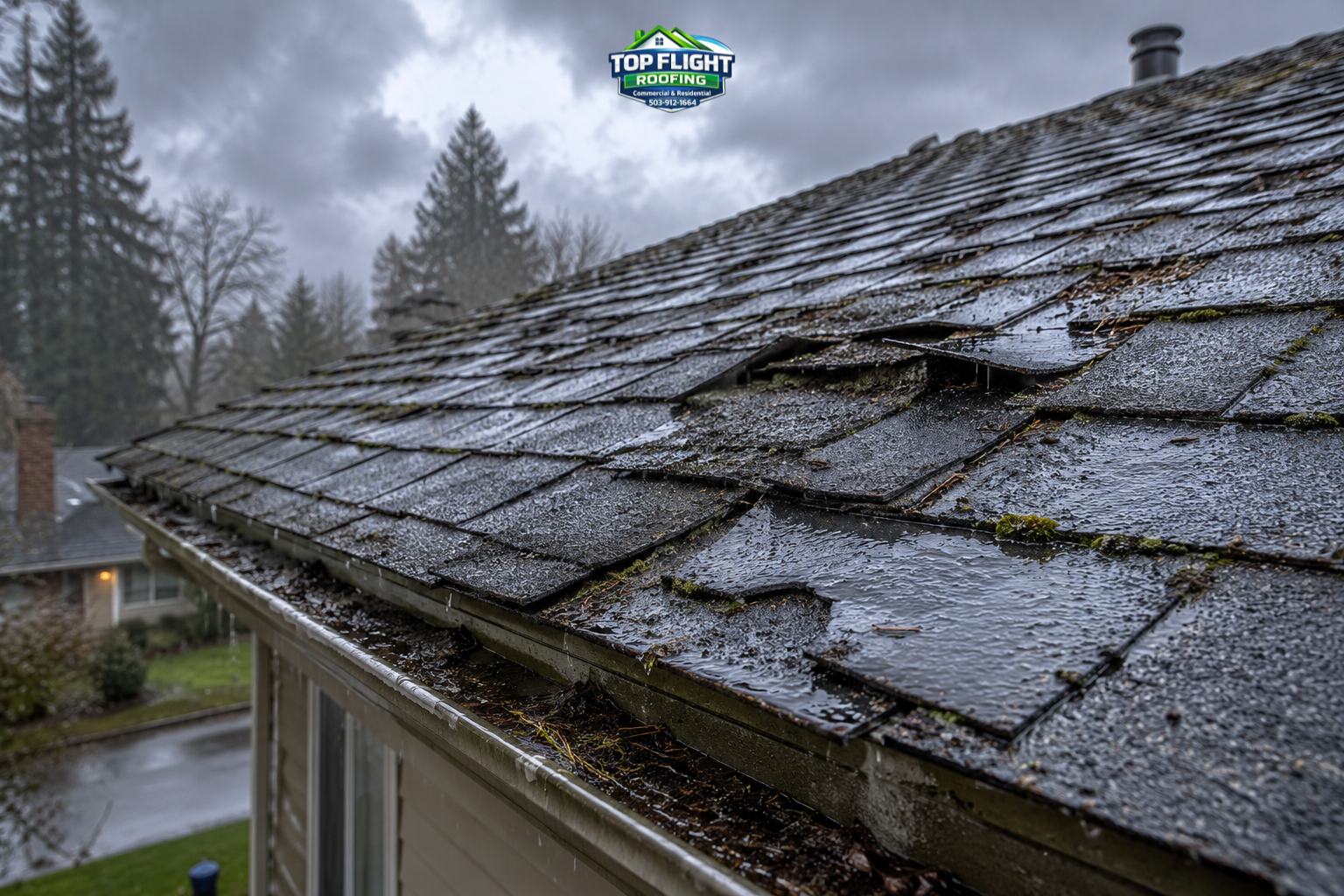
Wind is dangerous on its own, but it becomes even more damaging when paired with rain. Strong gusts can lift shingles, push water under edges, and blow debris across the roof surface. Once shingles are loosened, water has a much easier path into the roofing layers. In Portland, storms can bring winds over 45 mph, which is enough to dislodge weakened materials and expose the roof to leaks.
For practical storm response, many property owners benefit from having emergency support ready through roofing repair services and reliable shingle repair options before minor storm damage becomes a larger structural problem.
The Main Weather Factors That Wear Down a Roof
Rain and constant moisture
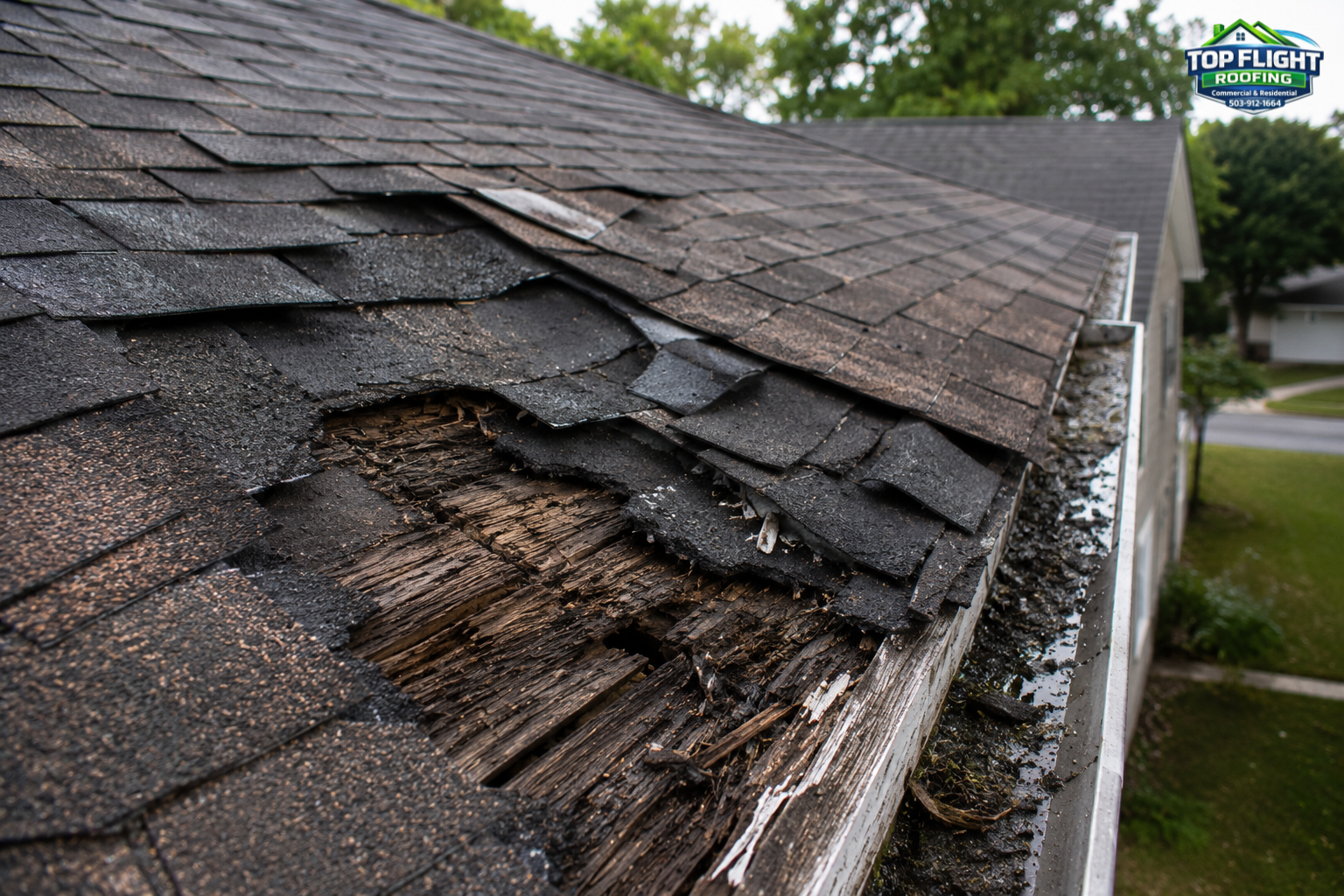
Rain is one of the most persistent threats to roofing systems in the Pacific Northwest. While a single rainstorm may not create obvious damage, frequent rainfall can seep into small cracks, degrade adhesives, and promote rot in roof decking and supporting wood. Over time, trapped moisture weakens the entire roof assembly and increases the risk of mold growth inside the home.
Portland’s climate makes this especially important. Frequent rain can lead to slow leaks that remain hidden for months. By the time the owner notices a ceiling stain or damp attic insulation, the damage may already be widespread. That is why annual inspections and seasonal maintenance are so valuable.
Wind uplift and flying debris
Wind damage often starts small. A lifted shingle edge, a loosened nail, or a bent piece of flashing may not seem serious at first, but each one creates a path for future damage. Once the roof surface is no longer tightly sealed, subsequent wind and rain events can worsen the issue quickly.
Flying branches, seed pods, and other debris can also strike roof surfaces with enough force to bruise shingles or dent metal components. If the roof has existing wear, these impacts can weaken the protection even more. This is one reason why proper gutter screening installation can help reduce debris buildup and support long-term roof performance.
Snow, ice, and freeze-thaw cycles
Snow may be less frequent than rain in Portland, but when it does arrive, it can still create serious roofing stress. Snow adds weight, and melting snow can refreeze near roof edges or in gutters, creating ice dams. Ice dams force water back under shingles, where it can damage insulation and decking.
Freeze-thaw cycles are also hard on materials. Water that enters a tiny crack expands when it freezes, widening the opening and creating more room for future leaks. Over several seasons, this cycle can create significant deterioration even if the roof appears intact from the outside.
Sun exposure and UV breakdown
Many homeowners focus on rain and wind, but ultraviolet radiation also plays a major role in roof aging. UV exposure dries out roofing materials, weakens protective coatings, and makes shingles brittle over time. This is a slow process, but it matters because brittle materials are more likely to crack, curl, or shed granules during routine weather events.
Even roofs in cloudy or rainy climates experience UV damage. Clear breaks in weather, reflective exposure, and seasonal summer heat can all contribute to gradual surface wear. The result is a roof that becomes less resilient year after year.
Early Warning Signs Homeowners Should Watch For
Missing, curled, or damaged shingles
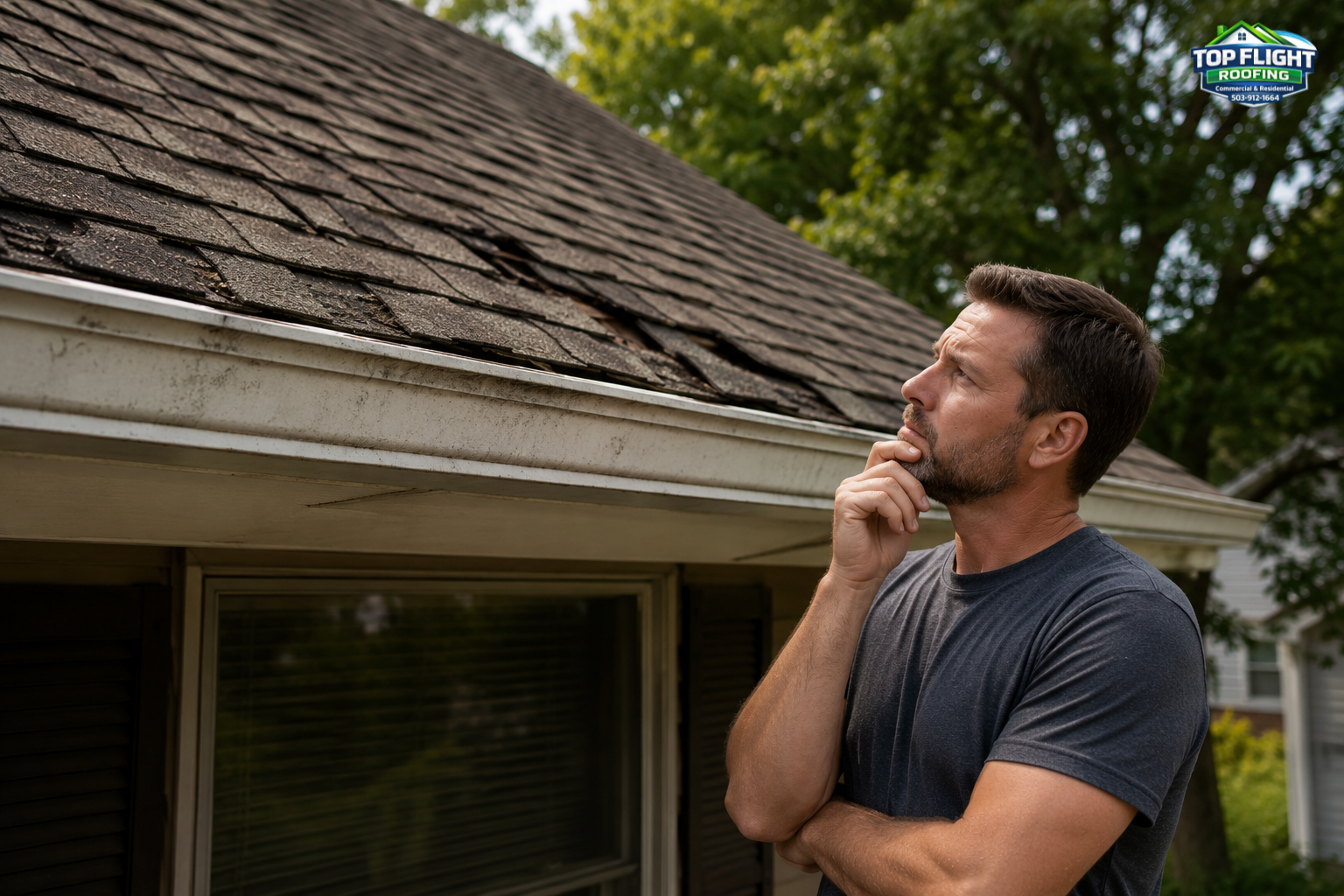
Shingles are often the first visible sign of roof aging. If you notice curling edges, missing pieces, or patches where the surface looks uneven, the roof may be losing its protective ability. Damaged shingles should be addressed quickly because they can allow moisture to reach the underlayment and decking below.
Not every broken shingle means a full replacement is needed, but it does mean the roof requires attention. A professional inspection can determine whether the issue is isolated or part of broader weather-related deterioration.
Leaks, stains, and attic moisture
Water stains on ceilings are easy to spot, but attic moisture is often detected much earlier. Damp insulation, visible mold, or a musty odor can all indicate roof leaks that are developing slowly. These issues usually point to weather-related failure around flashing, penetrations, or aging materials.
Because moisture can travel away from the entry point, the area with visible damage is not always the exact spot where the leak started. That is why trained inspectors look at the full roof system, not just the obvious stain.
Moss, algae, and debris buildup
Moss growth is common in wet climates and is more than a cosmetic concern. Moss holds moisture against the roof surface, which speeds up material decay. Algae can also darken the roof and indicate areas where moisture remains trapped longer than it should.
Debris buildup in valleys, gutters, and roof edges compounds the problem by slowing drainage. When water cannot move away efficiently, it stays on the roof longer and increases the chance of deterioration. If moss is becoming a recurring issue, a combination of maintenance and appropriate material selection is usually the best long-term approach.
Sagging or soft spots
A sagging roofline or soft area underfoot is a serious warning sign. These symptoms can indicate weakened decking, damaged supports, or ongoing water intrusion. Unlike superficial wear, sagging suggests structural concerns that require immediate professional evaluation.
If this kind of damage is discovered early, targeted repairs may prevent a larger and more expensive restoration. When the issue has advanced, replacement of damaged sections may be necessary to restore safety and stability.
What the Research Says About Weather-Related Roof Damage
Climate severity is increasing.
Weather-related deterioration is becoming more common because severe weather is becoming more severe. As noted in the LexisNexis report, all-peril severity rose by 9% between 2023 and 2024. This reflects a broader trend in which roofs face stronger winds, heavier precipitation, and more disruptive storms than they did in previous years. For property owners, that means roof maintenance has become a more important part of protecting the home’s value.
The takeaway is straightforward: roofs are still durable, but they are not designed to ignore climate trends. The better the maintenance strategy, the better the roof will hold up under changing conditions.
Regular inspections catch damage earlier.
Experts consistently recommend at least one professional roof inspection per year, plus additional checks after major weather events. That schedule gives homeowners a chance to identify loose flashing, minor leaks, damaged shingles, or moss growth before the damage becomes expensive. It also helps preserve warranties and improves budgeting for future repairs.
For a deeper breakdown of timing, see our roof inspection frequency guide. Routine inspections are one of the simplest ways to save money over the long run because they reduce the chance of hidden deterioration.
Material choice matters more than many people realize
Roofing materials should be matched to local conditions. In climates with persistent rain and moss pressure, materials with stronger moisture resistance often perform better. That can include metal roofing or certain composite shingles, depending on the structure and budget. The right choice is not only about appearance; it is about how well the roof resists weather over time.
Material selection also affects maintenance frequency. Some systems need more frequent cleaning or attention to drainage, while others are better at shedding water and resisting organic growth. Choosing wisely at the start can significantly reduce long-term damage risk.
For a broader overview of how weather affects roof systems in the region, the National Weather Service provides helpful information on storm conditions and precipitation patterns that influence roofing performance. In addition, roofing best practices from the Asphalt Roofing Manufacturers Association can help homeowners understand material behavior and installation standards.
Real-World Examples of Weather Damage in Action
Leaky skylight repair case study
One case from Vancouver, WA, illustrates how small installation or weather-related failures can snowball. An improperly installed skylight flashing led to leaks around the opening, which eventually damaged nearby roof areas. The repair team replaced the affected sections and installed custom metal flashing to prevent the issue from returning. This is a strong example of how the true source of a leak is often a weak transition point rather than the visible stain inside the home.
It also shows why regular inspection matters. If flashing problems are caught early, homeowners can avoid more expensive interior repairs, insulation replacement, and structural damage.
Warehouse roof restoration in Portland
A Portland warehouse experienced major deterioration after prolonged exposure to heavy weather. Instead of replacing the entire roof immediately, the restoration team replaced damaged sections and added a new coating system to improve durability. This type of solution can be highly effective when the structure is still sound, but the weather has worn down vulnerable areas.
The lesson here is that weather damage is not always a full replacement situation. In many cases, strategic restoration and targeted repair can extend the life of the roof and buy valuable time for future planning.
How these examples apply to homeowners
Whether the property is a home, small business, or large commercial building, the pattern is similar: water gets in through a small weakness, then the weather keeps exploiting that weakness. Once that cycle starts, deterioration accelerates. The best response is not to wait for a dramatic failure, but to identify and correct issues while they are still manageable.
If you are already seeing early warning signs, pairing inspection with the right service can help. Depending on the issue, that may mean siding installation and repair to stop wall-edge water intrusion or roofing insulation improvements to reduce moisture-related energy and comfort problems.
How to Protect Your Roof from Gradual Weather Damage
Schedule routine inspections and maintenance
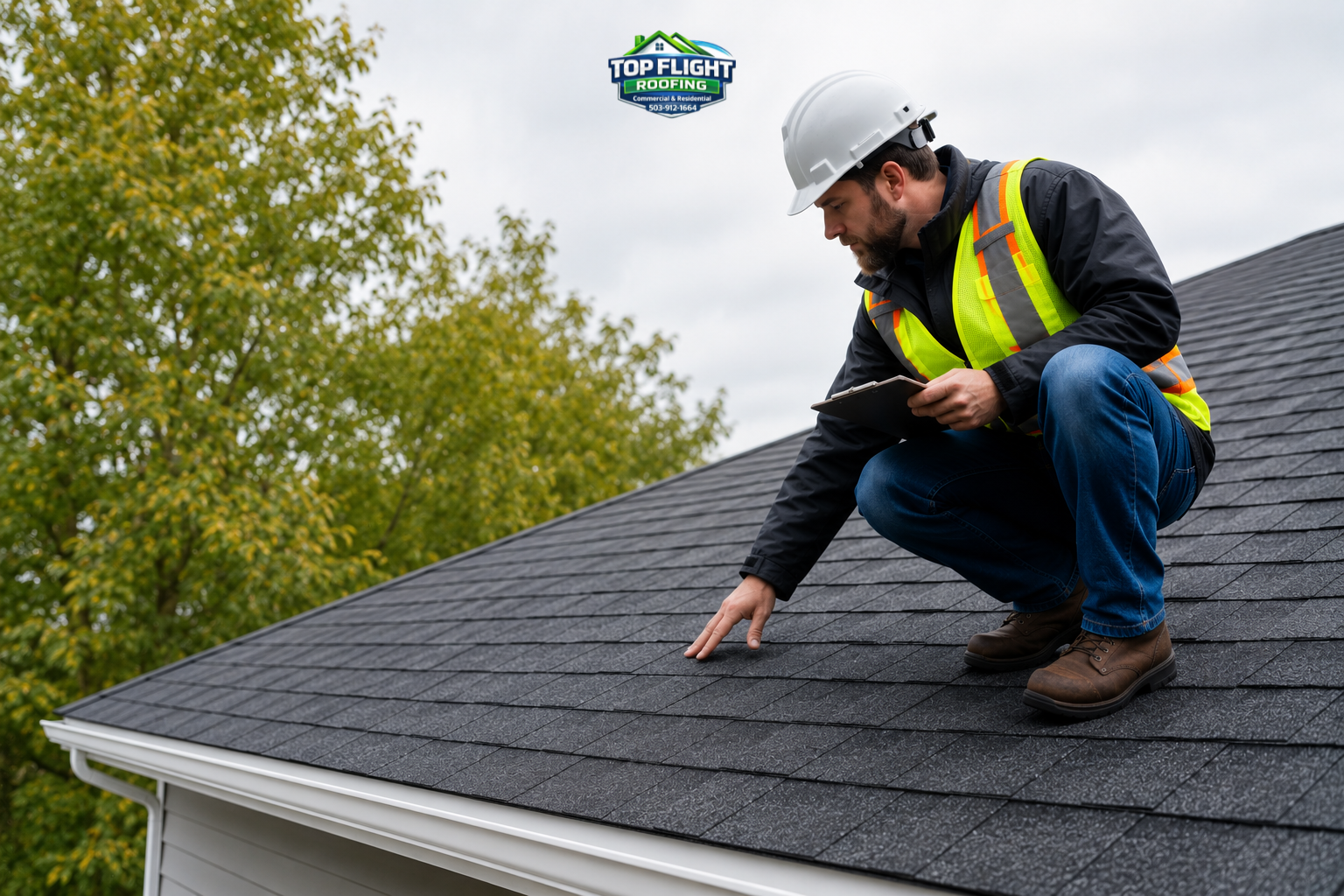
The simplest way to protect a roof is to inspect it regularly. Annual inspections are the standard recommendation, but it is also smart to schedule checks after major storms, prolonged heavy rain, or wind events. During an inspection, professionals look for loose shingles, flashing issues, clogged valleys, moss growth, and signs of trapped moisture.
Homeowners can do a visual check from the ground, but anything involving attic access, steep slopes, or active leaks should be left to a trained roofing contractor. Preventive maintenance almost always costs less than emergency work.
Keep water moving away from the roof.
Water management is central to roof longevity. Clean gutters, clear downspouts, and well-maintained drainage reduce the amount of water sitting near vulnerable edges. When water backs up, it can seep under shingles or rot fascia boards, leading to repairs that extend beyond the roof itself.
Installing gutter screening can help reduce clogs caused by leaves, moss, and debris. That is particularly helpful in areas with frequent tree cover or storm debris.
Choose materials and repairs based on the climate.
Weather-resistant materials are not just a preference; they are a long-term investment. If your roof is repeatedly exposed to moisture, moss, or wind uplift, talk with a contractor about the best options for your home. In some cases, upgrading the underlayment or selecting more durable shingles can significantly improve performance.
For homeowners planning larger updates, our roof lifespan and replacement planning guide can help you decide when repair makes sense and when replacement is the smarter choice. The goal is always to align the roof system with the climate it has to survive.
Frequently Asked Questions About Weather and Roof Damage
How often should I inspect my roof?
At a minimum, your roof should be inspected once a year and after major weather events. If your home is surrounded by trees, if the roof is older, or if you have experienced repeated leaks, more frequent checks may be worthwhile. The earlier the damage is identified, the more repair options you usually have.
What are the most common signs that my roof needs repair?
Look for missing or damaged shingles, ceiling stains, moss growth, attic moisture, sagging areas, and debris buildup in gutters or valleys. These symptoms often indicate weather-related wear. If you see more than one sign at once, the damage may already be progressing beyond a simple patch.
Can weather damage be prevented completely?
No roof can be made completely weatherproof forever, but risk can be reduced significantly. Regular maintenance, timely repairs, durable materials, proper drainage, and professional installation all help slow deterioration. The goal is not perfection; it is extending the life of the roof and avoiding preventable failures.
When should I call a roofing contractor?
Call a professional if you notice leaks, storm damage, loose shingles, recurring moss, or any sign of sagging. You should also call if you are unsure whether a problem is cosmetic or structural. A qualified contractor can identify the root cause and recommend the most cost-effective solution.
Conclusion: Stay Ahead of the Weather Before It Damages Your Roof
The weather does not usually destroy a roof all at once. It works slowly, using rain, wind, UV exposure, freeze-thaw cycles, and moisture buildup to weaken roofing materials year after year. By the time the damage becomes obvious, the issue has often been developing for quite some time. That is why proactive maintenance is so important.
If you want to protect your property, start with regular inspections, clean drainage, and timely repairs. Pay attention to early warning signs, choose materials that fit your climate, and act quickly when small issues appear. For help with inspections, repairs, and long-term roof protection, Top Flight Roofing LLC is ready to support your next step with trusted local expertise. If you are seeing signs of wear now, contact our team to schedule a free consultation and estimate, and keep your roof stronger for years to come.
Need help now? Explore our roofing services or review our related articles on roof inspections, premature aging, and leak prevention to make your next maintenance decision with confidence.