When your roof has a problem, time is of the essence. It's not just about plugging a leak; it's about protecting your home from a domino effect of water damage, mold, insulation issues, and structural problems. Acting quickly can help you keep the repair job small, maintain comfort inside, and save you from higher costs later. For those who want to stay ahead of these issues, services like roofing installation and repair, and shingle installation and repair can make the difference between a minor fix and a complete overhaul.
Roof emergencies can strike after a storm, during heavy rain, or when unnoticed wear finally reveals itself. The trick is spotting the signs early and having a plan. The U.S. Environmental Protection Agency points out that moisture can lead to mold if materials stay wet too long, which is why acting fast after a roof mishap is so crucial. For Portland folks, where rain is a regular visitor, being ready for urgent roofing problems is especially important.
Why Quick Roof Fixes Matter
Stop Water Before It Spreads
Water will find the easiest route, meaning a small roof gap can cause issues far from where the leak started. A damaged flashing seam or missing shingle can let water seep into attic framing, wall spaces, and ceilings before you even spot a stain. Quick roof repairs help stop that water in its tracks, reducing the chance of hidden moisture turning into a bigger problem.
Once water gets in, it can damage drywall, electrical systems, insulation, and flooring. Often, the ceiling stain is just the tip of the iceberg for a much larger issue. That's why quick action isn't just handy; it's vital damage control. If you think the problem is more than minor, professional carpentry support might be needed to check any affected framing or decking.
Protect Roof Structure and Interior Systems
Your roof is more than just shingles. It includes underlayment, decking, flashing, vents, and drainage components, all working together to keep things dry. When one part fails, it can stress the rest of the system. Fast repairs protect these layers from rot, sagging, or corrosion spreading.
The National Roofing Contractors Association advises regular inspections because many emergencies start as minor wear that goes unnoticed. They emphasize maintenance and early action as the best way to extend your roof's life. Pairing quick responses with regular maintenance is a smart move.
Common Causes of Roof Emergencies
Storm Damage and Wind Uplift
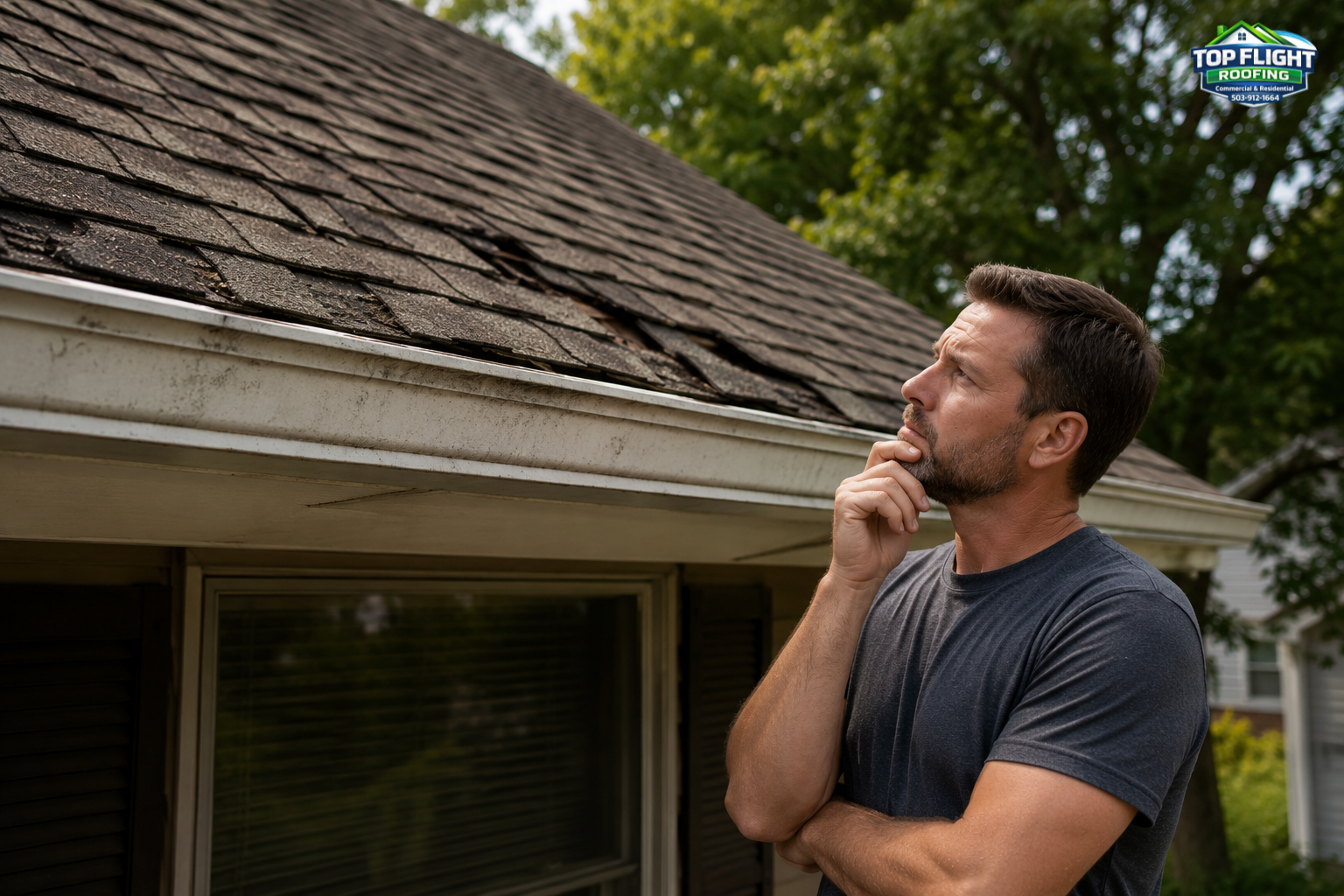
High winds can lift shingles, loosen fasteners, or tear flashing away from edges. Even if the damage seems small from the ground, wind often creates hidden gaps that let rain in during the next storm. In a place with frequent rain, that problem can worsen overnight.
Storm debris can puncture roofing materials or block drainage paths, causing water to pool where it shouldn't. If your gutters overflow or trap debris, the risk goes up. Adding gutter screening can help reduce blockages and improve water runoff control during bad weather.
Aging Materials and Failed Flashing
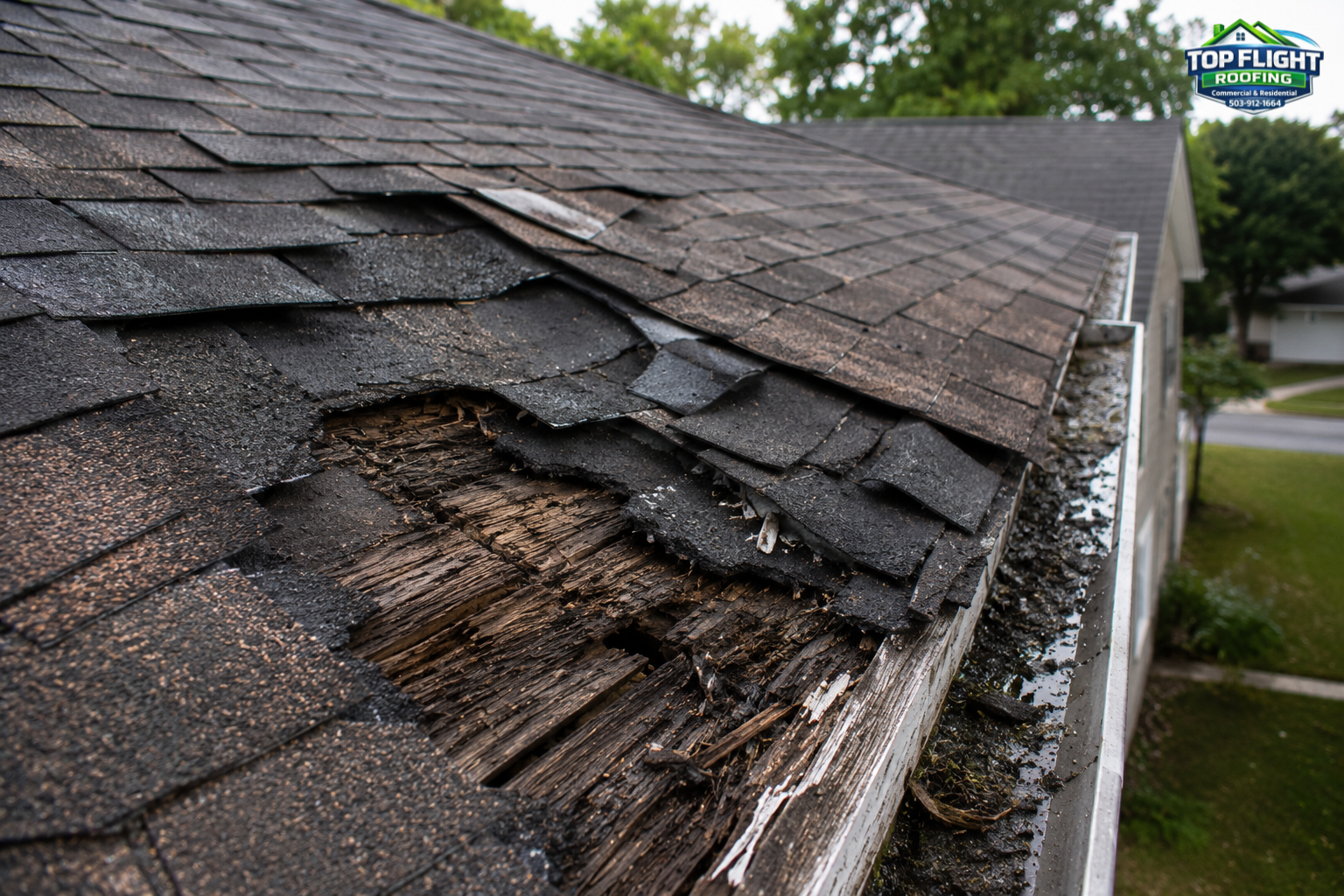
Over time, roofing materials weaken. Sealants dry out, flashing separates, and shingles get brittle. What starts as normal wear can turn into an emergency when heavy rain hits weak spots. Older roofs are especially vulnerable at valleys, chimneys, skylights, and other spots where water flows.
Flashing failure is one of the most common reasons for surprise leaks because these junctions face repeated expansion, contraction, and moisture. A professional check can tell if it needs a small fix or a bigger repair plan. Sometimes, the best solution is to improve the roof system with insulation and ventilation upgrades that help the structure last longer.
Poor Installation and Hidden Defects
Not every roof emergency is weather-related. Poor installation can leave a roof vulnerable from day one. Misaligned shingles, improper nails, and bad ventilation can all shorten the system's life. A roof may look fine for years until a defect shows up during a storm.
A Portland homeowner once dealt with a leaky skylight due to bad installation. The roofing company found that replacing it was cheaper than patching it repeatedly, and a new roof with proper ventilation stopped future leaks. This shows that emergency fixes aren't always temporary; they can reveal bigger issues needing long-term solutions.
What Happens When You Delay Repairs
Higher Repair Costs Over Time
One clear reason to act fast is cost. Water damage experts say controlling interior water damage quickly can cut repair costs by 40-60%. This reflects how quickly materials soak up moisture and how fast secondary damage develops. The longer water sits, the more systems are affected, and the pricier the project becomes.
A delayed repair can turn a manageable roofing issue into a multi-trade restoration project. Instead of just replacing shingles, you might need drywall repair, insulation replacement, mold cleanup, and electrical checks. It's way more efficient to tackle the roof first and stop the interior damage from getting worse.
Mold, Rot, and Structural Deterioration
Moisture inside can create a perfect environment for mold. Once mold starts growing, it spreads through porous materials and affects indoor air quality. Wood exposed to moisture may also start rotting, weakening the structure and posing long-term safety issues.
Rot doesn't always show up right away. Sometimes it silently grows behind walls or under roof coverings until the damage is severe. That's why emergency roof repair isn't just about looks or comfort. It's about keeping the home's structure intact and avoiding hidden damage that's costlier to fix later.
Damage to Insulation and Energy Efficiency
Wet insulation loses its punch, which can drive up energy use and make it harder to keep indoor temperatures comfortable. In a rainy place, even a small roof leak can hurt the home's overall performance. Once insulation gets damp, it might need replacing rather than just drying out.
For more on how roof performance affects energy, check out resources like the U.S. Department of Energy’s advice on insulation and building efficiency at energy.gov. Good roof maintenance boosts comfort, efficiency, and cuts utility costs, especially when paired with strong repair habits and durable roofing materials.
How Modern Roofing Materials and Tech Help
Faster Installation and Stronger Protection
Recent advances in roofing materials make emergency repairs quicker than before. Modern underlayments, adhesives, and weather-resistant shingles are designed for faster installation and better durability. This means repair teams can restore protection faster while keeping quality high.
Homeowners benefit from products that seal better, resist wind, and handle moisture during the repair process. If a temporary weather barrier is needed, modern materials can reduce vulnerability until the permanent fix is done. For more on how hidden layers boost roof performance, check our guide on roof underlayment.
Smart Home Monitoring and Early Detection
Another big trend is using smart home tech to catch leaks sooner. Sensors, alarms, and moisture monitors can alert homeowners to changes before visible damage appears. This gives property owners a better chance to call for emergency repairs quickly and limit the problem.
Tech doesn't replace inspections, but it adds another protective layer. A sensor in the attic might catch a leak during a storm, even when no stain has reached the ceiling yet. For homeowners who travel often or manage multiple properties, this early warning can be a lifesaver.
Steps Homeowners Should Take
Schedule Annual Roof Inspections
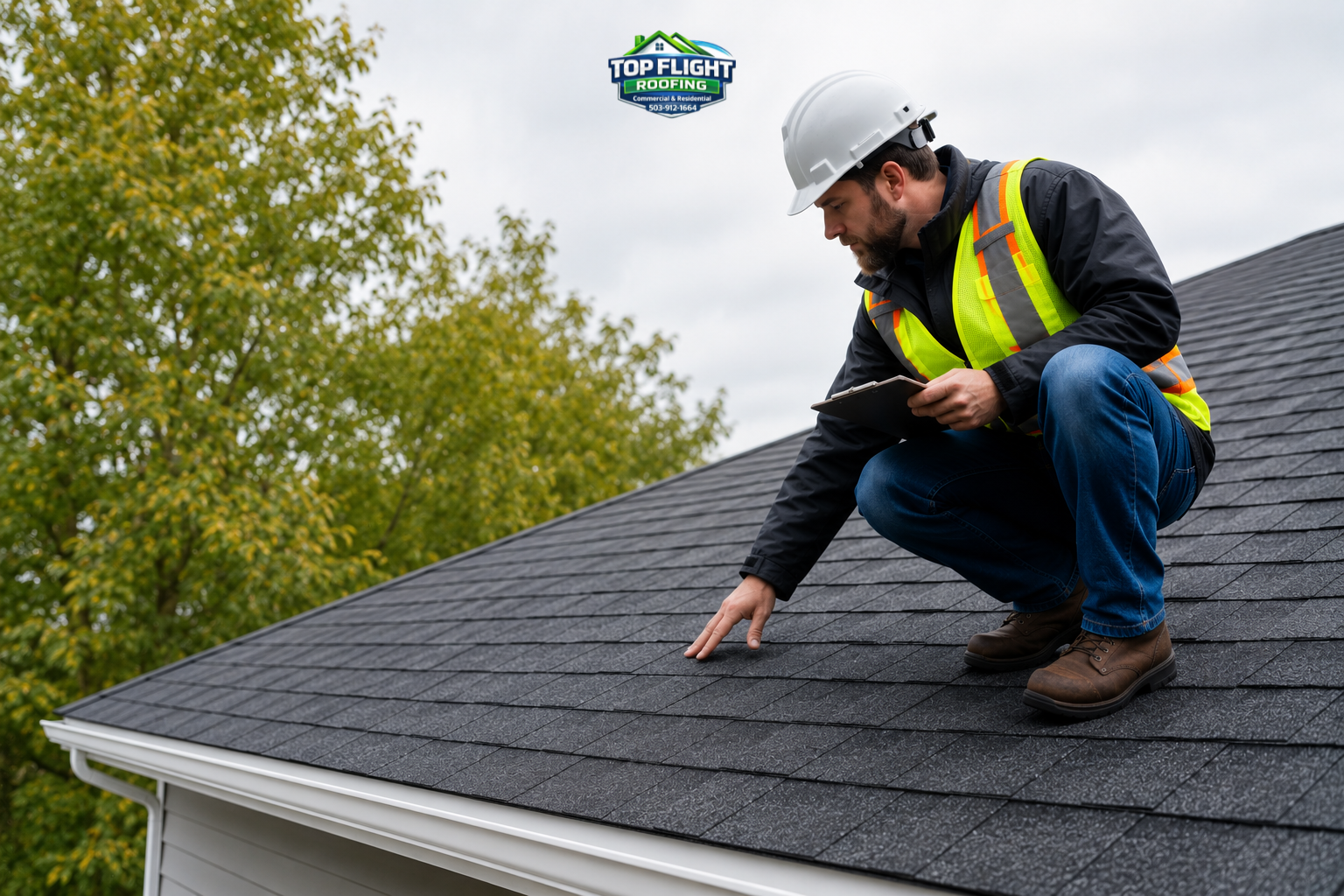
Regular inspections are one of the best ways to head off emergency repairs. Annual checks can spot lifted shingles, worn sealant, drainage problems, and flashing issues before they become urgent. A trained pro knows where roofs are likely to fail and can suggest maintenance before damage spreads.
If you want to save money over time, a proactive inspection schedule is your best bet. Our guide on regular roof inspections explains how small preventative steps can help you avoid expensive surprises. A little attention each year can save a lot of stress later.
Use Quality Materials and Certified Installers
Emergency repairs should use high-quality, weather-resistant materials whenever possible. Cheap patch products might hold temporarily, but often fail when the next storm hits. Quality materials improve the chances that the repair will last and protect the roof system instead of just covering the problem.
Professional installation is as important as the materials themselves. Even great products can fail if installed incorrectly. Choosing certified, experienced roofing pros ensures the repair supports the roof’s structure and long-term performance. That's crucial when the damage affects multiple components like shingles, flashing, and underlayment.
Keep Gutters and Drainage Paths Clear
Clogged gutters can lead to roof emergencies by trapping water near the roof edges. When water can't drain properly, it can back up under shingles or overflow into fascia and siding. That's why drainage maintenance should be part of every homeowner’s roof care routine.
For more on how runoff affects the whole home, see our article on how gutters protect your roof and foundation. Good drainage systems reduce water pressure on the roof and help protect the home from preventable moisture issues.
Immediate Steps After Spotting Roof Damage
Document the Damage and Protect the Interior
After finding roof damage, stay safe and document what you can. Take photos of ceiling stains, missing shingles, debris, or visible leaks. If water is coming in, place containers under active drips and move valuables away from the area.
Next, take basic steps to limit further damage inside. If safe, cover furniture, protect flooring, and keep people out of the wet area. These temporary measures buy time, but they don't solve the problem. The roof still needs a professional check and repair plan quickly.
Call a Roofing Pro Right Away
Timing matters after the first sign of roof trouble. A roofing pro can assess the damage, find the source, and decide if emergency patching or more extensive repairs are needed. Sometimes, a full replacement is the more cost-effective choice, especially if the roof is old or has been leaking.
If you need a local, responsive team, roofing installation and repair services can offer the expertise needed to stabilize the roof and plan the next step. For Portland homeowners, local roofing support is especially valuable during the rainy season when delays can quickly turn into bigger problems.
Know When a Temporary Fix is Enough
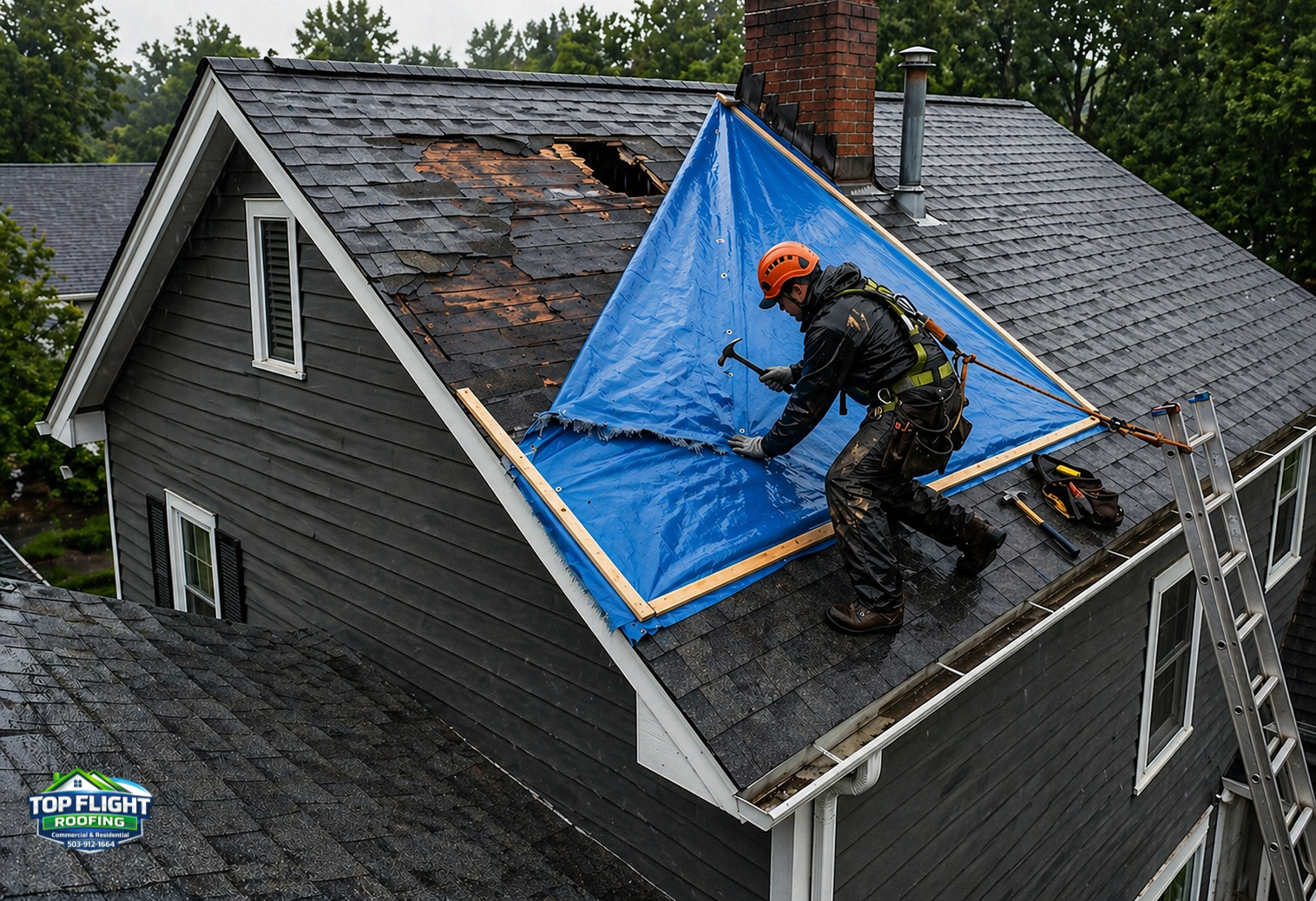
Sometimes a temporary repair is fine until weather conditions improve or materials arrive. Tarping, sealing, or patching can reduce immediate risk, but these measures shouldn't be treated as permanent solutions. A temporary fix only works when followed by a proper evaluation.
Homeowners often ask if they can handle minor repairs themselves. While small emergency measures might help in the short term, it's usually best for a pro to handle the permanent solution. This reduces the risk of hidden damage and ensures the repair fits with the existing roof system.
Why Portland Homes Face Special Roofing Risks
Frequent Rain and Moisture Exposure
Portland's climate makes roof vigilance key. Frequent rain means even a small roof defect can be exposed repeatedly, raising the chance of water intrusion. Repeated wetting and drying cycles also stress materials and sealants, which can shorten their life.
That's why homeowners should think of emergency repairs as part of a larger weather-resilience plan. In a wet climate, the roof isn't just a covering; it's a main defense system. Local expertise matters because the repair approach needs to fit the region’s moisture and seasonal weather patterns.
Local Experience and Service Quality
Top Flight Roofing LLC brings over 30 years of roofing experience in the Portland area, focusing on clean, detailed installations and dependable emergency service. This local knowledge is valuable because it helps the team spot common failure points, weather-related wear, and pick the right materials for the job. A fast response from an experienced contractor can keep a minor emergency from becoming a major repair project.
For homeowners comparing solutions, it's worth checking related roof performance topics like roofing solutions for Portland’s climate. Understanding how local weather affects materials makes it easier to choose repairs that last.
FAQs About Emergency Roof Repairs
How Do I Know If My Roof Needs Emergency Repair?
Look for visible leaks, missing shingles, interior water stains, sagging areas, damaged flashing, and debris after a storm. If you see water entering the home, treat it as urgent. Even if the leak seems small, the underlying issue might be bigger.
Can I Perform Temporary Repairs Myself?
Some homeowners can safely use buckets, tarps, or basic measures to reduce immediate damage. However, permanent repairs should usually be handled by a pro. Working on a roof can be risky, and an incomplete repair can let more water in.
How Quickly Should I Act After Noticing Damage?
Act right away. The first few hours are crucial for minimizing water damage. If you wait, moisture can spread into insulation, framing, and drywall, increasing the cost and complexity of the repair.
Do All Emergency Repairs Lead to Replacement?
No, many roof emergencies can be resolved with targeted repairs, especially when caught early. However, if the roof is old, repeatedly leaking, or structurally compromised, replacement might offer better long-term value. A pro inspection will help determine the right path.
Conclusion: Quick Roof Fixes Protect Your Home and Budget
Emergency roof repairs are a great way to protect your home from escalating damage. By stopping water intrusion early, you cut the risk of mold, rot, insulation failure, and structural problems. You also prevent a small issue from growing into a much larger and more costly restoration project.
The best approach combines quick response with ongoing prevention. Annual inspections, quality materials, reliable drainage, and professional installation all work together to avoid emergencies in the first place. If you need help now or want to prep your home before the next storm, Top Flight Roofing LLC is ready with experienced, detail-focused service.
To protect your home before damage spreads, contact our team for a free consultation and estimate. Learn more about our shingle repair services, explore our guide to spotting roof damage early, and take the next step toward a safer, drier home today.